Application Focus
Natural food colours for dairy, snacks, sauces, and processed foods
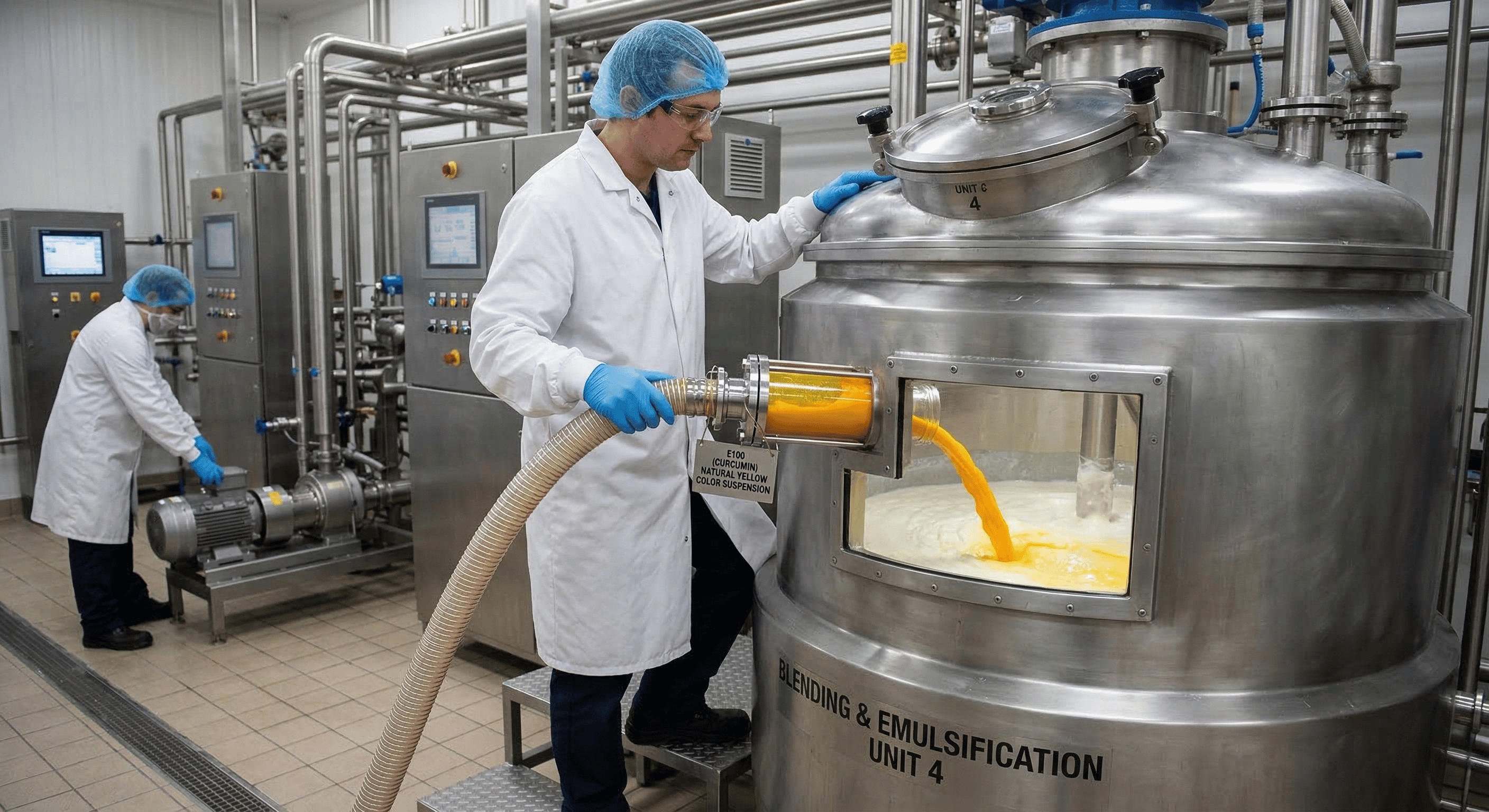
Four Squares supplies spice-derived colour systems for manufacturers that need reliable yellow, orange, and red shade development in commercial food production. We help buyers review the right route for the application, the target visual benchmark, and the practical demands of scale-up and export qualification.
What this helps you achieve
Achieve more consistent yellow, orange, and red shade development than raw spice-led colouring alone
What this helps you achieve
Reduce visual variation across batches in dairy, snacks, sauces, and prepared foods
What this helps you achieve
Select the right colour route for the matrix, process conditions, and finished product benchmark
What this helps you achieve
Support procurement, QA, and R&D review with specifications, traceability context, and documentation support
Ingredient systems
Recommended ingredients by application objective
Turmeric Oleoresin
A strong option for bright yellow to golden shade development in dairy, savoury, sauce, and other application-suitable food systems.
Paprika Oleoresin
Used where warm orange-red to red-orange visual development matters and heat contribution should remain controlled.
Capsicum Oleoresin
For spicy systems where red hue and pungency need to work together rather than as separate design choices.
Use cases
Common application areas
Dairy & cheese
Processed cheese, cheese sauces, butter, margarine, and spreads where colour consistency and visual warmth matter.
Snacks & coatings
Extruded snacks, savoury coatings, and seasoning systems that need bold surface colour or integrated visual warmth.
Sauces & prepared foods
Dressings, marinades, ready meals, soups, and savoury fillings where matrix and process timing affect final appearance.
How to choose the right natural colour system
Turmeric and paprika are often the starting point for dairy and cheese applications.
Sauces and dips need careful review of oil phase, emulsion design, acidity, and heat exposure.
Snack coatings depend heavily on carrier choice, blending order, and whether the target is a bold surface effect or a more integrated tone.
Technical and formulation considerations
The target shade matters more than a generic colour name. Most buyers are working toward a benchmark SKU, swatch, or defined visual brief.
Matrix fit matters. The same ingredient can behave differently in oil systems, emulsions, dry blends, and high-shear processed foods.
Colour and flavour can interact at working dosage, especially with turmeric and paprika, so realistic trials remain important.
Addition stage, shear, fat level, cook profile, and packaging can all influence the final result.
Documentation and export support
Serious buyers usually need more than a colour description. Four Squares supports specification review, batch traceability, contaminant and residue awareness, and export-oriented documentation for professional qualification processes.
FAQ
Common buyer questions
Which ingredient is usually preferred for yellow shade development in dairy?
Turmeric oleoresin is often the lead option for yellow to golden tones, but the final choice depends on matrix, target shade, and how subtle the flavour contribution needs to remain.
When should paprika be used instead of capsicum?
Paprika is generally the stronger fit when colour is the main objective. Capsicum becomes more relevant when the brief combines red hue with chilli heat.
Can Four Squares help with format selection?
Yes. Format suitability depends on whether the system is oil-rich, emulsified, dry blended, or otherwise process-sensitive.
Next step
Need colour guidance for cheese, snack coatings, or sauces?
Share the application, matrix, and visual benchmark you are working toward. We can help narrow the shortlist before trial work begins.