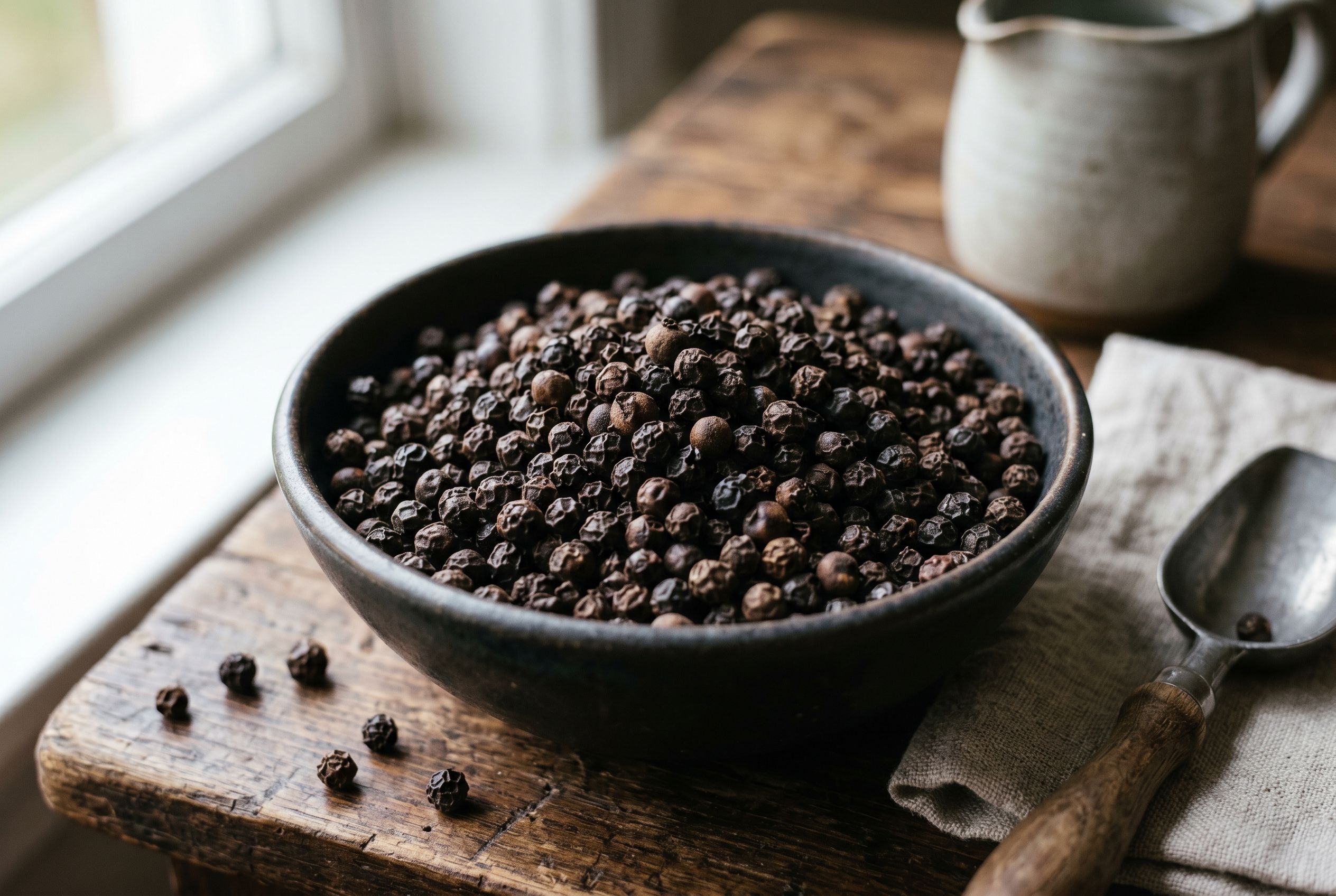
Tellicherry black pepper has a premium reputation in export markets, but serious buyers do not pay more for the name alone. They pay for a combination of origin, grade logic, berry maturity, and the kind of sensory profile that can support a stronger finished product story.
That distinction matters. In commercial buying, premium only works when it translates into something useful: stronger visual grade consistency, a fuller pepper note, better fit for grinders or seasoning blends, or a better story for a gourmet or high-spec food line. Tellicherry black pepper earns attention because it sits at that intersection between origin heritage and practical ingredient value.
The origin story begins with the Malabar coast
Any serious discussion of Tellicherry black pepper should start with Malabar. The Malabar coast of Kerala has long been associated with India’s pepper trade, and Malabar Pepper is the safer GI-linked origin reference in commercial language. Tellicherry, named after the old export port of Thalassery, is best treated as a premium grade and market expression within that broader Malabar pepper story.
This matters because sophisticated buyers increasingly ask whether an origin claim is protected, cultural, or merely decorative. A disciplined supplier should be clear. The commercial value here comes from the Malabar origin story, the historic spice-trade reputation of the region, and the grade characteristics buyers associate with Tellicherry-style premium black pepper.
That clarity builds trust. It tells buyers they are dealing with a supplier who understands the difference between market shorthand and origin governance.
Climate and growing conditions shape the pepper’s character
Pepper quality is not created by branding alone. It reflects where the vines grow and how the fruit develops before harvest.
The Malabar region benefits from a humid tropical climate, heavy monsoon influence, and fertile soils that support pepper cultivation at scale. Warm temperatures, seasonal rainfall, and the ecological conditions of the Western Ghats help produce the environment in which black pepper vines develop the berry structure and flavour depth that made the region globally famous.
For buyers, this is not just agricultural background. Climate helps explain why a pepper origin develops a certain commercial identity. When a sourcing region is known for pepper associated with boldness, maturity, and aroma, that becomes part of the value proposition for seasoning manufacturers, grinders, gourmet brands, and private-label buyers.
Why Tellicherry is considered premium
The premium position of Tellicherry black pepper comes from grade expression more than mythology. In trade terms, the key idea is that these are typically larger, better-developed berries associated with a more mature harvest profile.
That matters because larger and more mature pepper berries are often linked to stronger visual appeal and a more layered flavour expression. Instead of reading only as blunt heat, premium black pepper can offer a fuller pepper note with more aroma depth and better balance. For certain buyers, especially those building quality-sensitive finished products, that distinction is commercially meaningful.
Premium positioning also benefits from scarcity logic. Not every lot qualifies for the higher-end grade perception buyers want. When the visual size, density, and processing standard are tighter, the product moves out of commodity territory and into a more deliberate procurement conversation.
Where this matters in the food industry
Not every buyer needs Tellicherry-grade pepper — and that’s the point. The right choice depends on what the pepper has to do once it leaves your warehouse, not on which name sounds more premium.
For commodity-driven applications, a lower-spec grade may be commercially rational. But for buyers supplying grinders, table-use pepper, premium seasoning blends, gourmet retail packs, or products where the pepper itself is part of the flavour signature, the grade matters more.
A larger berry can improve visual perception in whole-pepper formats. A more distinctive aroma profile can support better product positioning in premium blends. A better-known origin story can strengthen private-label and specialty-food narratives where provenance influences buyer confidence.
This is where premium spices stop being abstract. The commercial value appears when a buyer can connect origin and grade to a product decision.
What buyers should evaluate before paying the premium
A disciplined supplier conversation should cover more than whether the product is called Tellicherry.
Buyers should ask:
- what grade standard is being offered
- how the lot has been cleaned and prepared
- what end application the pepper is best suited for
- whether the visual berry profile matches the intended finished-product positioning
- what documentation and specification support the supplier can provide
This is especially important in export buying. Premium claims that are not tied to lot discipline, grade clarity, and specification support are weak. Premium claims that are grounded in real trade logic are bankable.
The commercial takeaway
Tellicherry black pepper commands a premium because it gives the buyer a more useful combination of origin story, market recognition, and grade character. The real advantage is not just that it sounds prestigious. The advantage is that it can fit premium food applications more convincingly than a generic black pepper offer.
For buyers who care about berry boldness, flavour depth, grinder suitability, and provenance-led positioning, Tellicherry-linked black pepper can justify the higher conversation.
If your team is evaluating premium whole black pepper for grinders, seasoning systems, gourmet lines, or export resale, Four Squares can support the discussion with current availability, grade direction, and specification-led commercial handling.