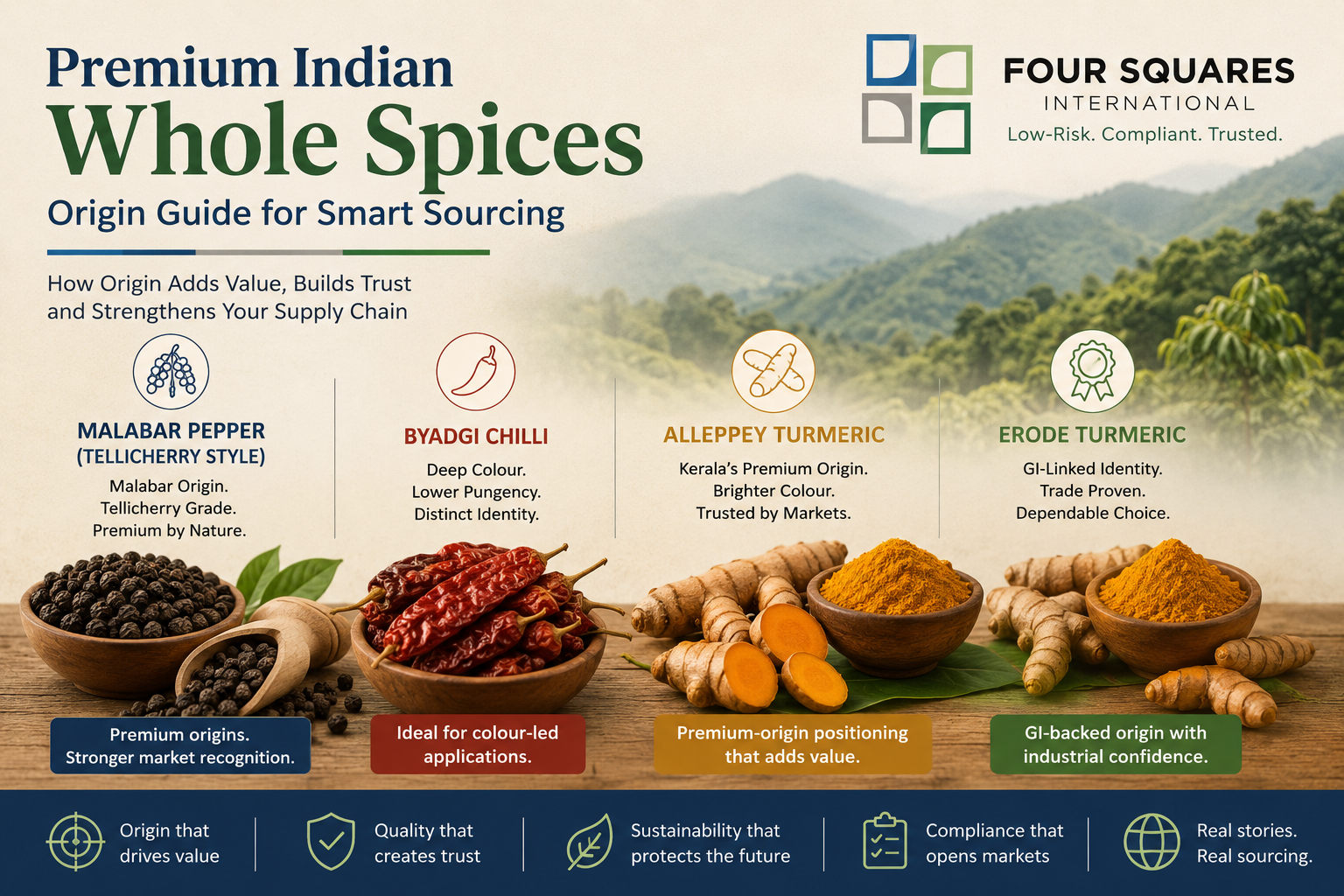
International buyers often hear origin names long before they get a clear explanation of what those names actually mean in commercial sourcing. A spice may be described as premium, GI-linked, single-origin, or region-specific, but the useful question is simpler: does that origin meaningfully help the buyer make a better sourcing decision?
That is the purpose of this guide. It translates Indian whole spice origins into buyer language. Instead of treating origin as romance or pure marketing, it explains how regional identity, market recognition, and grade logic can matter in practical buying.
Not every product needs an origin premium. But in some categories, origin can influence buyer confidence, product story, and commercial fit enough to deserve real attention.
Quick comparison: how buyers should think about key Indian whole spice origins
Use this short comparison before going deeper into individual origin stories.
Malabar and Tellicherry-linked black pepper: Buyers typically associate this with premium black pepper positioning, stronger berry-size expectations, and a more recognized gourmet or high-spec story. Premium matters most in quality-sensitive pepper programs, but buyers should avoid treating Tellicherry as a standalone GI claim.
Byadgi chilli: Buyers typically associate this with strong red colour, lower pungency, and a more distinctive regional identity than a generic chilli offer. Premium matters most in colour-led applications, but buyers should avoid paying extra if the end use does not benefit from that distinction.
Alleppey turmeric: Buyers typically associate this with premium-origin positioning, Kerala-linked identity, and stronger colour-led narrative value. Premium matters most when the turmeric story supports the product position, but buyers should avoid assuming origin story alone replaces application-fit review.
Erode turmeric: Buyers typically associate this with a more trade-grounded and GI-linked turmeric identity. Premium matters most when buyer familiarity and recognized regional trade logic support the sourcing decision, but buyers should avoid treating GI identity as proof of technical superiority by itself.
Why origin matters in whole-spice sourcing
Origin matters when it changes one or more of the following:
- the market’s perception of the ingredient
- the relevance of GI-linked or region-linked identity
- the sensory or visual expectations buyers attach to the product
- the finished product story the buyer wants to support
That does not mean origin replaces specification review, batch checks, or documentation discipline. It means origin can add a commercial layer that makes one sourcing route more valuable than another.
Malabar pepper and the Tellicherry premium story
For black pepper, serious buyers should begin with Malabar. Malabar Pepper is the safer GI-linked origin reference in the premium black pepper conversation, while Tellicherry is better treated as a premium grade and trade expression associated with that broader origin story.
This distinction matters. Buyers often hear “Tellicherry” used as shorthand for premium black pepper, but disciplined sourcing requires a clearer explanation. The commercial value comes from a combination of Malabar-origin recognition, stronger berry-size expectations, and the premium market perception attached to Tellicherry-style grades.
For buyers selling premium grinders, gourmet lines, or high-spec pepper blends, this origin-and-grade logic can be commercially meaningful.
Byadgi chilli and colour-led sourcing logic
Byadgi is one of the cleaner examples of origin adding real sourcing value. It has strong market recognition because buyers associate it with deep colour, lower pungency, and a more deliberate regional identity than a generic red chilli offer.
That matters for food systems where colour is commercially important but extreme heat is not the objective. In those settings, Byadgi becomes more than an origin story. It becomes a functional sourcing choice supported by a stronger identity framework.
For importers, blenders, and manufacturers building colour-led chilli programs, that is a meaningful differentiator.
Alleppey turmeric and premium-origin positioning
Alleppey turmeric is best understood as a premium-origin positioning story rather than a shortcut claim. Its commercial value comes from market recognition, Kerala-linked identity, and the expectation of stronger colour-led positioning in the turmeric conversation.
For buyers, the real relevance is not whether the origin sounds premium. It is whether the origin helps support the application, the quality narrative, or the customer-facing positioning.
That can matter in spice blends, curry systems, and retail programs where the turmeric story carries commercial weight.
Erode turmeric and GI-linked trade identity
Erode represents a different kind of buyer value. It brings a more trade-grounded and GI-linked identity into the turmeric sourcing discussion. That can appeal to buyers who want a recognized regional turmeric origin with practical industrial credibility.
Where Alleppey may pull more strongly as a premium-origin narrative, Erode may support a more grounded sourcing conversation centered on known trade identity and buyer familiarity.
Origin only matters if it helps the buyer decide
This is the key principle. Buyers should not pay a premium for origin language unless that origin helps with one of three things:
- better product positioning
- clearer sourcing differentiation
- stronger alignment with the intended application or customer expectation
If the origin does not create one of those advantages, the premium may be more story than substance.
What GI does and does not mean
GI can strengthen origin credibility, but it should not be misunderstood. It is not a blanket guarantee of compliance, suitability, or technical superiority.
What it can do is provide a more defensible regional identity for a spice that already has market recognition attached to its place of origin. Used correctly, that can help buyers build a stronger premium ingredient story.
Used carelessly, it becomes decorative language.
How buyers should compare Indian whole spice origins
A useful origin comparison framework includes:
- what the market already associates with that origin
- whether the origin has GI-linked value or only market shorthand value
- whether origin supports the finished product story
- whether the application actually benefits from paying more for origin recognition
- whether the supplier can support the product with disciplined specifications and documentation
This keeps the discussion grounded.
The commercial takeaway
Premium Indian whole spice origins are useful when they help the buyer buy better, position better, or differentiate better. Malabar and Tellicherry matter for premium pepper logic. Byadgi matters for colour-led chilli sourcing. Alleppey and Erode matter in different ways across turmeric buying.
The best sourcing decisions do not come from origin storytelling alone. They come from understanding where origin meaningfully improves commercial fit.
A simple checklist for comparing spice origins
- Does origin improve the finished product story in a meaningful way?
- Does origin change buyer or customer perception enough to justify the premium?
- Is there GI-linked value here, or only market shorthand value?
- Does the application actually benefit from paying for premium origin recognition?
- Can the supplier support the product with disciplined specifications and documentation?
When buyers should not overpay for origin story alone
Origin should matter only when it improves product positioning, sourcing differentiation, or application fit. If it does not create one of those advantages, the premium may be more story than substance.
Talk to Four Squares about origin fit for your sourcing brief
If your team is comparing Indian whole spice origins for import, blending, retail, or formulation use, Four Squares can help connect origin logic to specification fit, product positioning, and practical sourcing decisions.
- Ask which spice origin best fits your sourcing brief
- Discuss premium-origin positioning for your target market
- Review where origin adds value and where it does not