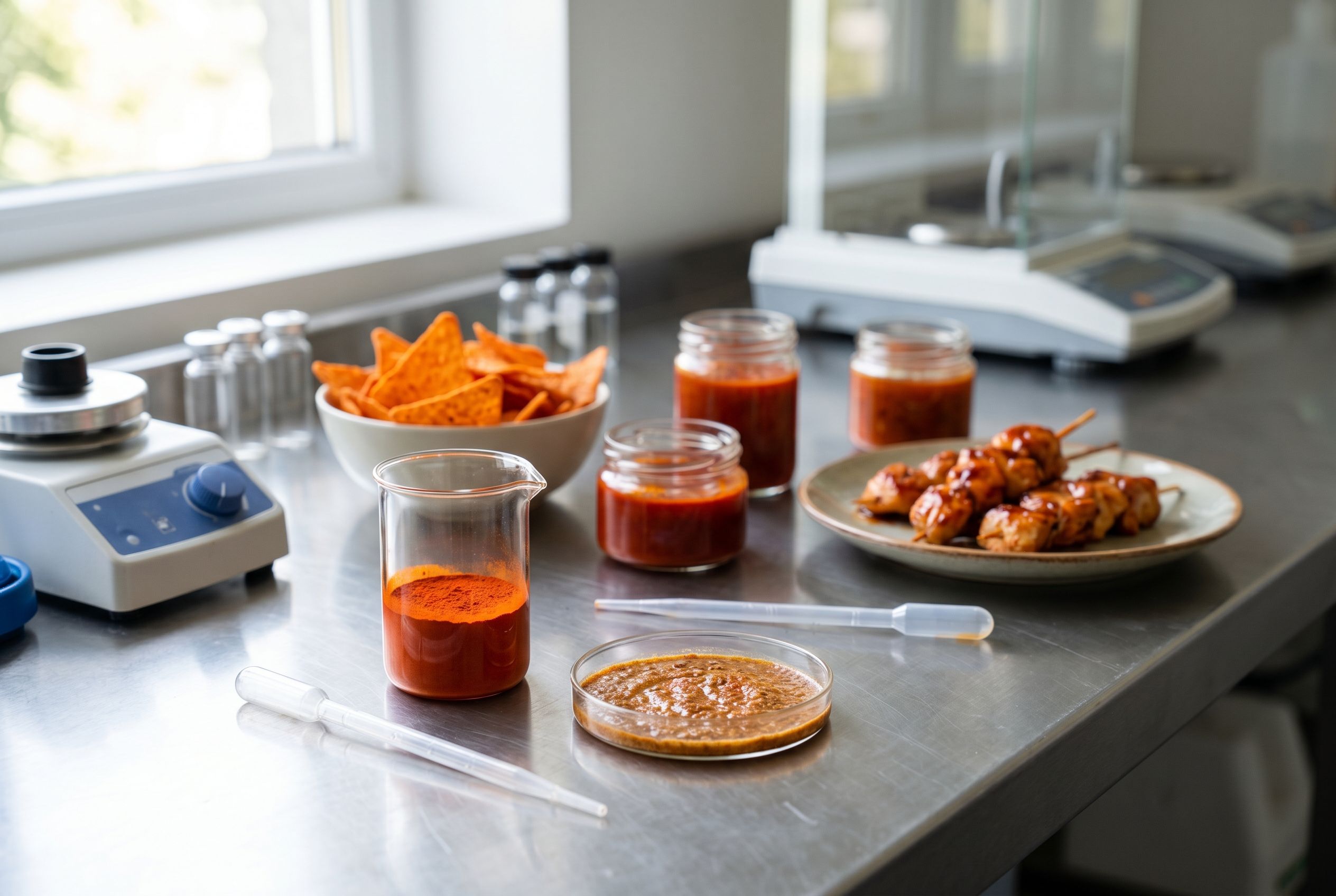
Paprika Oleoresin in Processed Foods: Clean Label Colour Trends Buyers Should Watch
Processed-food manufacturers are under pressure from two directions at once. They still need strong visual appeal, but they are also being pushed toward simpler ingredient stories, more recognisable inputs, and formulation choices that can survive commercial scrutiny.
That is one reason paprika oleoresin is getting renewed attention. It sits at the intersection of colour delivery, application practicality, and the wider move toward natural-colour systems in processed foods.
For buyers, this is not just a trend story. It is a formulation and sourcing question. Where does paprika oleoresin actually fit? Which product systems benefit most from it? And what should R&D, procurement, and QA teams review before treating it as the right answer for a processed-food brief?
Why processed-food teams are revisiting colour systems
Across snacks, sauces, seasonings, marinades, and prepared foods, colour is still doing commercial work. It shapes first impression, signals flavour expectation, and helps a finished product look consistent from batch to batch.
What has changed is the tolerance for ingredient complexity.
More product teams are under pressure to simplify declarations, reduce reliance on older artificial-colour strategies, and align new product development with cleaner-label expectations from retailers, foodservice partners, and brand owners. In practice, that does not mean every manufacturer is chasing the same label outcome. It means more formulation teams are reassessing which colour ingredients can support both product performance and market positioning.
That is where paprika oleoresin comes back into the conversation. It offers a route to orange-red colour development in a format many industrial food teams already understand, but now view through a different commercial lens.
Where paprika oleoresin fits in processed foods
Paprika oleoresin is not a generic answer for every product category. Its value depends on the application, the processing environment, and the sensory target.
In processed foods, it is commonly considered where manufacturers want to build or support warm orange-to-red visual character in systems such as:
- savoury snacks and snack seasonings
- sauces and table condiments
- marinades and coating systems
- prepared foods and convenience products
- seasoning blends and dry mixes
- processed meat or analogue-style savoury systems where permitted and application-relevant
The commercial attraction is straightforward. Paprika oleoresin can help create a more intentional colour strategy without forcing the manufacturer back toward a more artificial-looking solution set.
For some buyers, that supports a reformulation brief. For others, it supports a product-refresh project, a regional relaunch, or a cleaner ingredient narrative for new product development.
Clean-label pressure is changing how buyers evaluate paprika oleoresin
The clean-label trend is often discussed too vaguely. In real B2B buying, it usually means one of three things.
First, the ingredient system should help support a simpler or more acceptable declaration outcome for the target market and category.
Second, the ingredient should reduce avoidable complexity in the formulation discussion. If the colour system creates technical friction, handling problems, or declaration confusion, it becomes harder to defend internally.
Third, the ingredient has to work in the product, not just on a trend deck. Processed-food teams are not buying narratives. They are buying something that can survive heat, fat phase, mixing conditions, visual targets, and repeat production logic.
This changes the supplier conversation. Buyers are now more likely to ask not only what paprika oleoresin is, but which format, which strength band, which application pathway, and what kind of specification support exists behind it.
In other words, paprika oleoresin is increasingly being evaluated as part of a broader formulation architecture, not just as a line item in a raw-material list.
Application questions matter more than trend language
The strongest buyer conversations are specific.
If a manufacturer is using paprika oleoresin in a snack seasoning, the relevant concerns may include colour intensity, distribution in the seasoning system, and how the ingredient behaves once applied to the final product.
In a sauce or marinade, the discussion may shift toward dispersion behaviour, colour expression in the full matrix, and how the ingredient performs under the product’s actual thermal and processing conditions.
In prepared foods or savoury systems, buyers may care more about how paprika oleoresin helps support consistent visual identity across production runs.
That means serious qualification should cover questions such as:
- what processed-food application is the grade intended to support?
- what colour outcome is the team trying to achieve?
- what processing conditions may affect performance?
- what specification ranges are commercially relevant for review?
- what documentation is available to support technical evaluation and buyer qualification?
A supplier who can answer those questions clearly is more useful than one who simply repeats that the ingredient is natural or trend-aligned.
Why the industry trend matters now
There is a wider market backdrop behind this shift.
Food brands are under continued pressure to make products look appealing while keeping the ingredient story commercially manageable. Retail scrutiny, private-label competition, and faster reformulation cycles all push teams to revisit legacy systems. At the same time, buyers do not want to create a new problem while solving an old one. A cleaner-looking ingredient strategy still has to be scalable, reviewable, and fit for the product system.
That is why application-led colour ingredients are gaining attention. Buyers are not just asking whether a material sounds better. They are asking whether it performs better in the actual commercial brief.
For paprika oleoresin, this trend works in its favour when the use case is clear. It is already familiar to many food formulators, but current market pressure is making teams look again at where it can solve a present-day challenge: maintaining visual impact while moving toward a more disciplined ingredient story.
What a supplier discussion should cover before qualification
Before a buyer moves forward, the supplier discussion should stay practical.
That means covering:
- intended application and process conditions
- target colour direction and consistency expectations
- relevant grade or strength fit
- specification clarity for internal technical review
- documentation pathway for buyer qualification
- commercial readiness for sample, quote, and scale-up discussion
This is where Four Squares should be strong. Not by overclaiming, but by helping the buyer connect the ingredient to the application. Buyers do not need a loose promise that paprika oleoresin is the answer to clean label. They need a disciplined conversation about whether a specific grade can support a specific processed-food objective.
The commercial takeaway
Paprika oleoresin is back in focus because the processed-food market is changing how it evaluates colour ingredients. Clean-label pressure, reformulation activity, and demand for commercially workable natural-colour strategies are pushing more buyers to review ingredients through an application-first lens.
For the right processed-food system, paprika oleoresin can be more than a colour input. It can be part of a cleaner, more deliberate product architecture.
The key is to evaluate it properly. Trend language alone is not enough. Buyers should assess application fit, processing logic, specification discipline, and supplier handling before they move toward qualification.