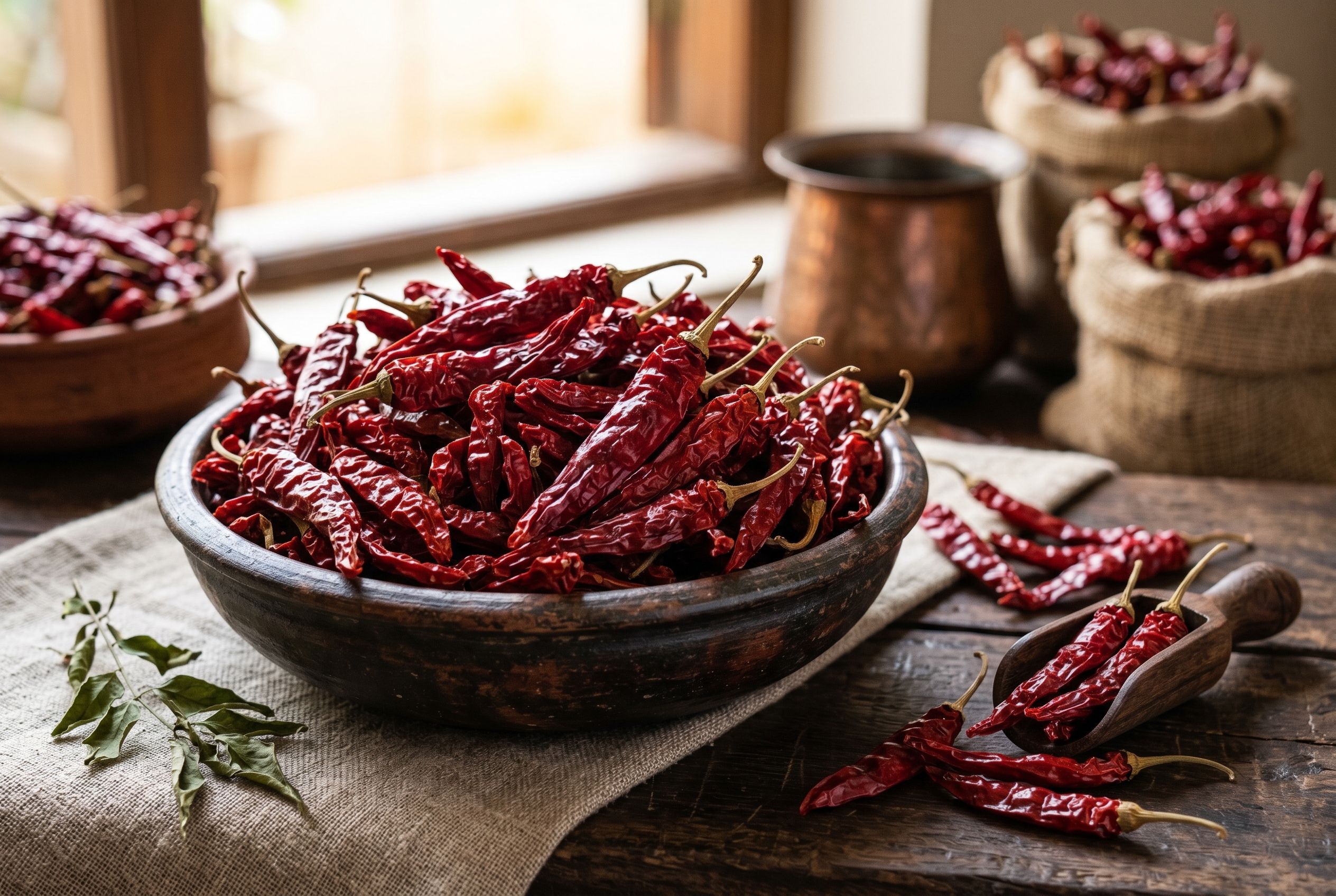
Byadgi chilli earns attention because it solves a specific commercial problem. Many buyers want red chilli for colour, visual warmth, and flavour contribution without pushing pungency too far. Byadgi fits that conversation exceptionally well.
Its premium status is not based on hype alone. It is supported by a recognised GI-tagged origin, a distinctive regional identity, and a practical sensory profile that suits colour-forward food applications.
That makes it one of the more commercially useful origin stories in India’s whole-spice portfolio.
Why the GI story matters here
Unlike many loose origin claims in the spice trade, Byadgi has a clearer GI-backed footing. That gives buyers a stronger sourcing story and a cleaner way to explain why the product stands apart from generic red chilli offers.
For procurement teams, that matters because GI language can strengthen origin credibility when it is used correctly. It does not replace technical review, but it does help distinguish the product from undifferentiated market supply.
In practical terms, a GI-backed chilli origin gives importers, brands, and ingredient buyers a better provenance story when they want to build a premium or origin-conscious offering.
Climate and regional character shape the product
Byadgi chilli is associated with Karnataka and the growing conditions of that region. Warm cultivation periods, rain-fed crop logic, suitable soils, and a dry-down pattern that supports the pod’s final character all contribute to the chilli’s market identity.
The commercial effect is what matters most. Buyers associate Byadgi with deep red colour, wrinkled pod appearance, and a profile that is more colour-led than heat-led.
That changes how the product is used.
Why Byadgi is seen as premium
Byadgi is valued because it can deliver strong red visual character without forcing the buyer into high-pungency territory. That balance gives it real commercial flexibility.
It is especially useful where the finished product should look rich and warm but remain manageable in terms of heat. For many food manufacturers, that is a better outcome than simply buying the hottest chilli available.
This is also where the origin premium makes sense. A chilli with recognised colour strength, lower pungency, and a GI-backed identity is not competing only as a commodity. It competes as a more deliberate ingredient choice.
Where it fits in the food industry
Byadgi chilli can be especially relevant in:
- spice blends where red colour is commercially important
- snack seasonings and savoury systems
- masala applications where balance matters
- products that need a visual red signature without aggressive heat load
- ingredient programs linked to colour-first chilli sourcing
That is why Byadgi earns its own place in a sourcing conversation, not a footnote in a general chilli listing. It fits a real formulation logic.
What buyers should still review
GI-backed origin is an advantage, but it is not the only buying criterion. Buyers still need to review the intended application, pungency expectations, visual target, lot condition, and supplier documentation support.
A disciplined supplier should be able to explain where Byadgi is a strong fit, where another chilli may be better, and how the product should be framed commercially.
The commercial takeaway
Byadgi chilli is premium because it combines a trusted regional identity with a product profile that solves a real buyer need: strong colour without excessive heat.
That makes it especially valuable for food manufacturers, spice blenders, and importers building colour-led chilli programs rather than pure pungency-driven ones.
If your team is sourcing whole red chilli for blends, masalas, seasoning systems, or other colour-forward applications, Four Squares can support the conversation with origin-led positioning, commercial fit guidance, and current supply discussion.