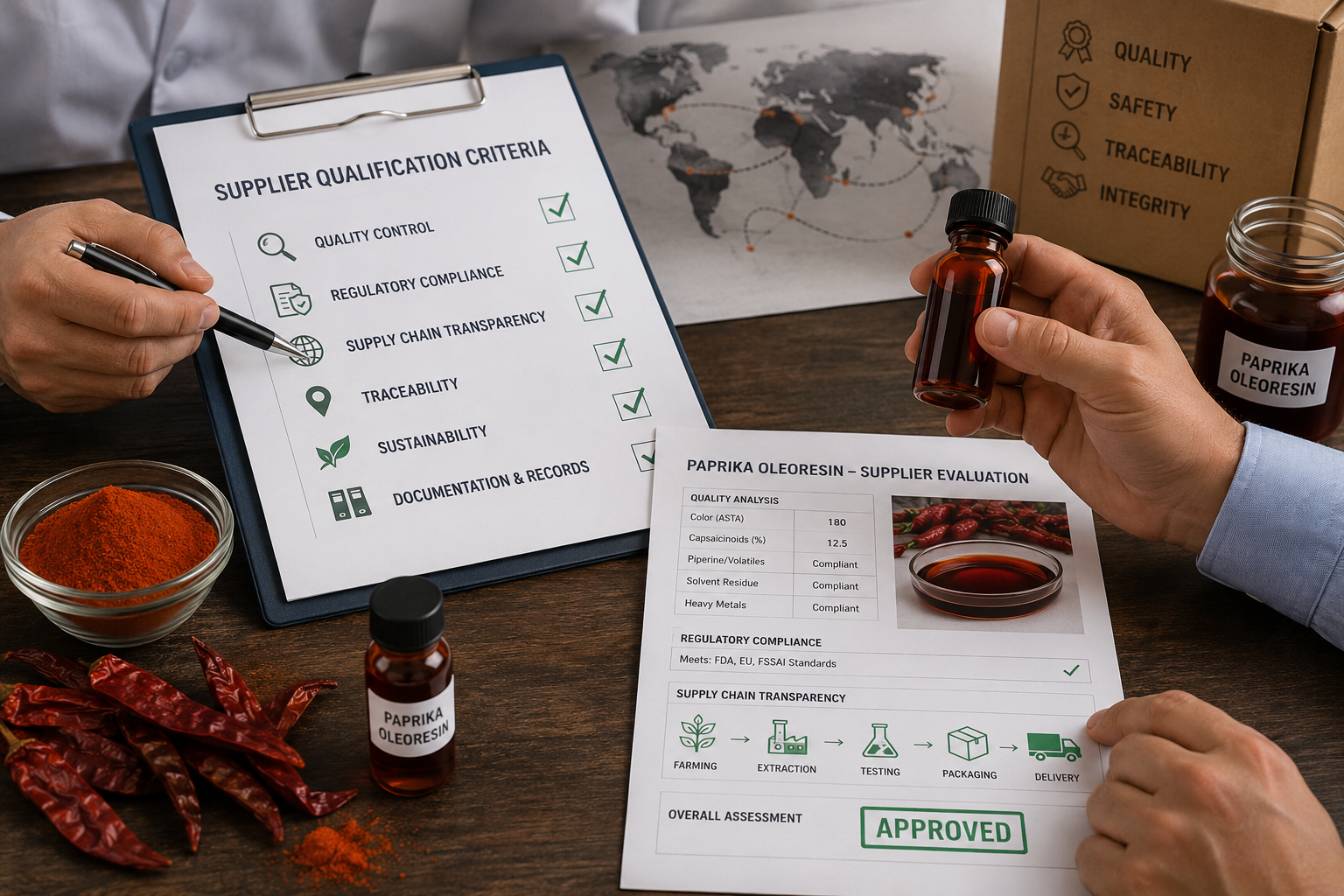
Paprika oleoresin is a cornerstone in the food industry, valued for its natural vibrant color and subtle flavor notes. While its primary appeal often lies in its ability to impart hues from bright orange to deep red, for European food manufacturers, the decision to source this ingredient extends far beyond mere chromatic value. The intricate landscape of EU regulations, coupled with increasing consumer demand for transparency and safety, necessitates a rigorous approach to supplier qualification. This guide delves into the essential checks and balances buyers should implement to secure a reliable, compliant, and high-quality paprika oleoresin supply.
The Foundation: Uncompromising Quality Control and Specifications
The first step in any robust supplier qualification process involves a meticulous review of quality control measures and product specifications. A reputable paprika oleoresin supplier must provide clear, comprehensive technical data sheets and Certificates of Analysis (CoAs) for every batch. These documents should detail critical parameters, including:
- Color Value: Expressed in ASTA units, typically ranging from 20,000 to 100,000 ASTA, indicating coloring strength.
- Solvent Residues: Compliance with stringent limits for residual solvents like hexane, acetone, or ethanol, as per EU directives.
- Microbiological Purity: Absence of pathogenic bacteria (e.g., Salmonella, E. coli) and adherence to total plate count limits.
- Heavy Metals: Compliance with maximum levels for lead, cadmium, arsenic, and mercury as stipulated by EU Regulation (EC) No 1881/2006.
- Aflatoxins: Strict limits on B1 and total aflatoxins, critical for food safety.
- Purity Checks: Verification for the absence of unauthorized dyes like Sudan I, II, III, and IV, which are strictly prohibited in the EU.
Suppliers should openly share their analytical methods, and ideally, provide evidence of third-party laboratory verification, adding an extra layer of assurance regarding data integrity.
Navigating European Regulatory Waters with Precision
The European Union imposes some of the world's most rigorous food safety and quality regulations. For paprika oleoresin, suppliers must demonstrate unwavering adherence to several key legislative frameworks:
- Food Additives Regulation (EC) No 1333/2008: Paprika oleoresin (E 160c) is permitted as a coloring food additive, but its use and purity criteria are clearly defined. Suppliers must confirm their product meets these specific purity requirements.
- Contaminants in Food (EC) No 1881/2006: This regulation sets maximum levels for various contaminants, including heavy metals, which are highly relevant for paprika oleoresin derived from agricultural raw materials.
- Pesticide Residues (EC) No 396/2005: While paprika oleoresin is an extract, the raw paprika peppers used in its production are subject to maximum residue levels (MRLs) for pesticides. A diligent supplier will have robust controls over their raw material sourcing to ensure MRL compliance.
- General Food Law (EC) No 178/2002: This overarching regulation establishes principles and requirements for food safety and traceability, which forms the bedrock of all ingredient sourcing.
- Rapid Alert System for Food and Feed (RASFF): European buyers should be aware of a supplier's history, or lack thereof, on RASFF notifications, particularly concerning issues like illegal dyes or contaminants.
It is crucial to verify that a supplier doesn't just claim compliance but can provide ongoing evidence of adherence to these dynamic and evolving regulations.
Documentation Discipline and End-to-End Traceability
Beyond regulatory compliance, the backbone of a reliable supplier relationship is impeccable documentation and a transparent traceability system. Essential documents expected from a paprika oleoresin supplier include:
- Technical Data Sheets (TDS): Detailed product information, usage guidelines, and storage conditions.
- Safety Data Sheets (SDS): Information on safe handling, storage, and emergency procedures.
- Allergen Statements: Clear declarations regarding the presence or absence of common allergens.
- GMO Statements: Assurance regarding non-GMO status.
- Certificates: Relevant certifications such as FSSC 22000, ISO 9001, HACCP, and Good Manufacturing Practices (GMP) demonstrate a commitment to recognized food safety and quality management systems. For organic paprika oleoresin, certification under EU Regulation 2018/848 is mandatory.
Furthermore, a supplier's ability to demonstrate end-to-end traceability, from the specific pepper farms or regions where the raw material was cultivated, through the extraction process, to the final packaged product, is increasingly non-negotiable. This level of transparency is vital for risk management and consumer confidence.
Proactive Supplier Audit and Verification Strategies
While documentation provides a paper trail, proactive verification through audits is paramount. European food manufacturers should consider:
- On-site Audits: Conduct direct audits of the supplier's manufacturing facilities to assess hygiene, quality control processes, pest management, personnel training, and recall procedures.
- Remote Audits: For initial screening or when travel is restrictive, remote audits can offer valuable insights into a supplier's systems and documentation.
- Third-Party Audits: Leveraging recognized third-party certifications (like those mentioned above) can significantly streamline the audit process, as these bodies independently verify adherence to international standards.
A supplier's openness to such scrutiny speaks volumes about their confidence in their operations and their commitment to transparency.
Beyond Transactions: Cultivating Partnership and Technical Support
The relationship with a paprika oleoresin supplier should extend beyond mere transactional exchanges. Evaluate potential partners on their:
- Responsiveness: How quickly and comprehensively do they address technical queries, quality concerns, or supply chain challenges?
- Technical Support: Do they offer expertise in application development, formulation advice, or regulatory guidance specific to your needs?
- Reliability: A consistent supply of compliant product, delivered on time, is critical for your production schedules.
- Commitment to Improvement: A good partner is invested in continuous improvement and proactive in communicating potential issues or innovations.
Complementary Insights for Application Value
While this guide focuses on qualifying your supplier, understanding the full spectrum of paprika oleoresin's utility in various industrial food applications is equally vital. For deeper insights into its performance characteristics and how its color value impacts product appeal, refer to our article on Paprika Oleoresin's Industrial Color Value. This complementary resource will help you maximize the ingredient's potential once you have secured a trusted source.
Conclusion: Investing in Trust and Transparency
For European food manufacturers, the careful qualification of a paprika oleoresin supplier is an indispensable investment. It safeguards product integrity, ensures regulatory compliance, protects brand reputation, and ultimately fosters consumer trust. By meticulously evaluating quality controls, regulatory adherence, documentation, traceability, and a partner's commitment to support, buyers can confidently secure a paprika oleoresin supply that truly goes beyond color and stands up to the exacting standards of the European market.