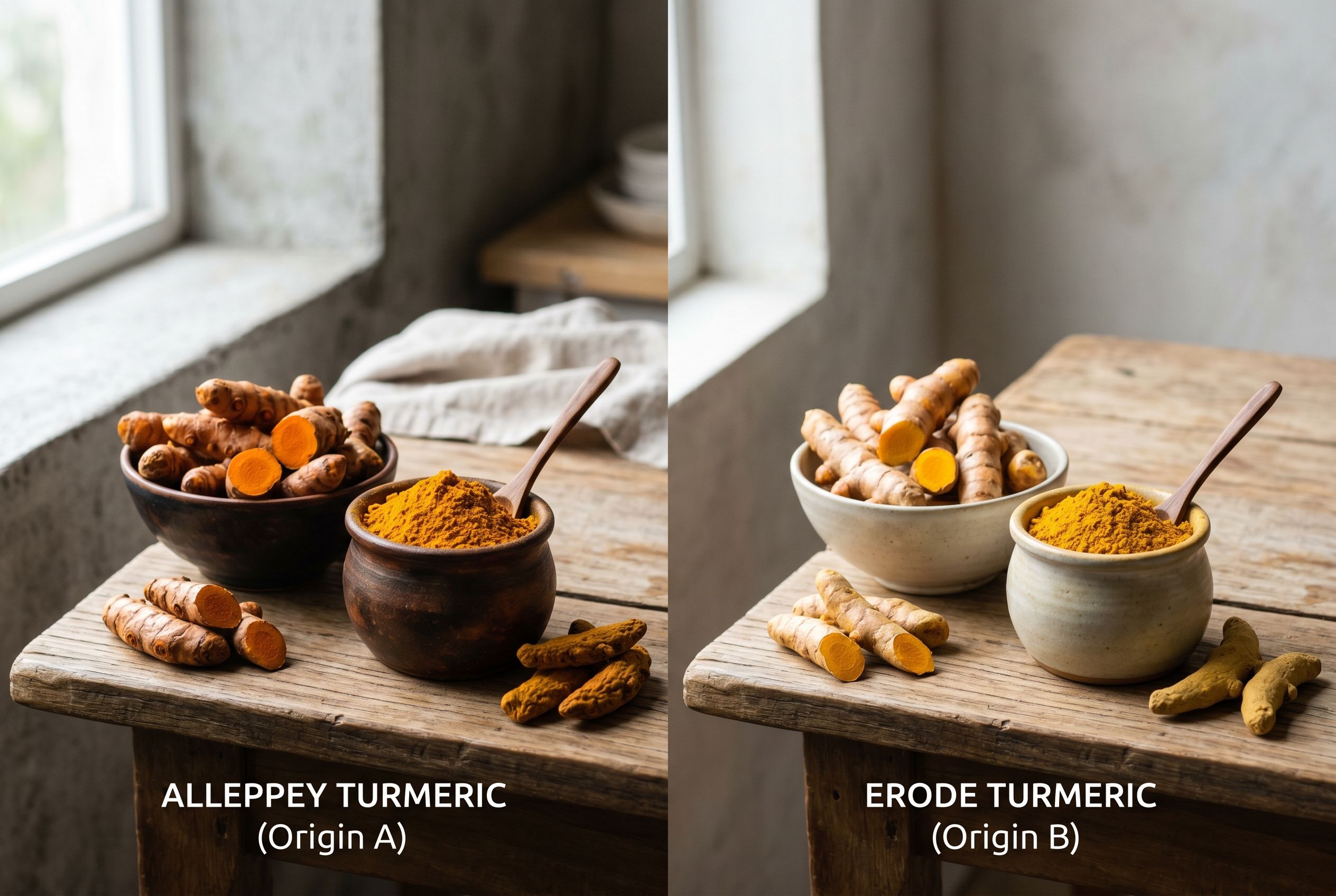
Turmeric sourcing gets more useful when buyers stop asking which origin is “best” and start asking which origin fits the application better. Alleppey and Erode are both strong names in Indian turmeric trade, but they do not need to be sold as identical stories.
A better approach is to compare them through the lens that actually matters in food manufacturing: colour expectation, origin identity, commercial positioning, and how the ingredient will be used in the final system.
That is the framework buyers need. It is also the framework suppliers should be using if they want to be taken seriously.
Two different turmeric conversations
Alleppey turmeric is often chosen because it carries a premium-origin perception linked to Kerala and a stronger colour-led market story. Erode turmeric, by contrast, has a more clearly anchored GI-recognised market identity and is strongly associated with Tamil Nadu’s long-standing turmeric trade.
That does not automatically make one superior. It means they serve different commercial narratives.
If the buyer wants a turmeric with more premium-origin storytelling value, Alleppey may come forward faster. If the buyer wants a turmeric with a recognised trade identity and broad industrial familiarity, Erode may be the more straightforward sourcing conversation.
Climate and origin help explain the difference
Kerala’s humid, rainfall-rich environment shapes the Alleppey story. Erode’s turmeric story is rooted in a different agricultural setting in Tamil Nadu, where the cultivation ecosystem and trading history have built a strong market reputation of their own.
For buyers, the value of this comparison is not academic. Different growing conditions can shape how an origin is positioned in terms of colour style, aroma expectation, and commercial identity. That is why origin remains relevant in procurement even when buyers still need to verify lot-specific performance through specs and samples.
Where Alleppey can be the better fit
Alleppey may be the better choice when the buyer is building a premium-facing product story and wants a turmeric origin with stronger recognition for colour-rich positioning.
This can matter in:
- premium spice blends
- curry systems where colour presence is central
- origin-led retail storytelling
- food programs where ingredient provenance supports brand value
The commercial advantage here is often narrative strength combined with visual expectation.
Where Erode can be the better fit
Erode can be the stronger option when the buyer wants a recognised turmeric origin with broad industrial credibility and a more grounded sourcing conversation.
This can be useful in:
- standardised food-manufacturing programs
- seasoning and blended ingredient systems
- buyers looking for a well-known GI-tagged turmeric origin
- procurement teams that prioritise practical availability and clearer trade familiarity
The advantage here is not glamour. It is commercial usefulness and sourcing confidence.
What buyers should compare directly
Instead of debating the names in the abstract, buyers should compare the following:
- intended colour outcome
- target flavour contribution
- product category and finished-positioning level
- whether origin story matters to the end customer
- whether the buyer needs GI-linked sourcing language
- specification support and supply consistency
These questions turn the discussion from folklore into procurement logic.
Avoid the wrong buying shortcut
One of the most common mistakes is assuming a premium-sounding origin always deserves the order. That is lazy procurement.
The better decision is to choose the origin whose strengths align most closely with the product brief. A premium-origin turmeric used in the wrong kind of application is wasted value. A more trade-grounded origin used in the right setting can be the smarter commercial move.
The commercial takeaway
Alleppey and Erode should not be framed as winner and loser. They should be framed as different tools for different sourcing goals.
Alleppey is often stronger when the buyer wants premium-origin pull and colour-led perception. Erode is often stronger when the buyer wants a recognised turmeric trade identity with practical industrial logic behind it.
If your team is comparing turmeric origins for blends, curry systems, retail formats, or industrial food applications, Four Squares can help narrow the right route based on application, origin story, and commercial fit.